
IAPB Brings Internationally Renowned Researchers to Saskatoon
August 20, 2026
Noelle Chorney, Ag-West Bio

The International Association of Plant Biotechnology conference is an opportunity for specialists in various fields of plant biotechnology to gather to share their research methods, technologies and discoveries with each other. The conference takes place once every four years and took place in Saskatoon, July 26–30.
Besides several staff from Ag-West Bio and GAAP attending the conference, hosting a booth as well as a networking event for international delegates, Ag-West Bio’s ABIC Foundation sponsored the attendance of Dr. Joyce Van Eck, Professor at the Boyce Thompson Institute. She presented her research on gene editing in the Solanaceae family as part of the Molecular Frontiers in Plant Biotechnology session at the conference.
Dr. Van Eck’s presentation was part of a diverse collection of presentations from researchers across the globe. Their research covered topics such as optimizing oat floral architecture, searching for phytochemicals in jade vines that may offer a treatment of diabetes, and understanding the circadian and diurnal control of plant hormone levels.
Dr. Van Eck’s research focuses on under-used species in the Solanaceae family, more commonly known as the nightshade family, which includes potato, tomato, peppers and eggplant. The under-used species have significant potential for food production but are often overlooked in mainstream agriculture. Using genome editing, Dr. Van Eck’s research aims to fast-track domestication of some of the wild species of nightshades.
Dr. Van Eck says, “Nightshades such as goldenberry and groundcherry have potential as food crops but many of the species and sub species have undesirable traits such as indeterminate growth habits, thorns or a tendency to drop fruit, which makes them difficult to cultivate.”
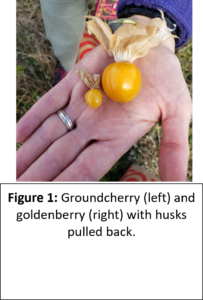
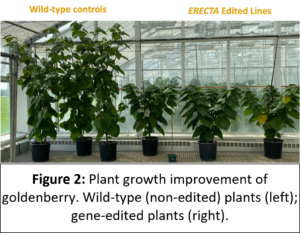
By editing specific genes known to create more compact plants, Dr. Van Eck’s research program has developed a goldenberry variety that has sparked interest among market growers. Similar work with the groundcherry removed a joint in the fruit stem that led to less abscission, or fruit drop, and better taste now that the fruit ripens on the plant. The groundcherry variety now has USDA approval to grow them. They have another project underway to remove thorns from a wild relative of eggplant known as the purple devil.
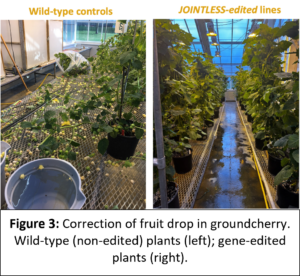
Dr. Van Eck’s research is focused both on applying CRISPR technology to food plants as well as creating new varieties of Solanaceae species that are useful to farmers. She says, “We worked with farmers in 11 different counties in New York, to try to give them more options. We wanted to know why they were choosing not to grow certain plants like groundcherries. Farmers tested some of the seeds we gave them – they turned out to be popular at the markets, but farmers wanted plants that would behave better before they would grow more acres.
“We knew the genes that we wanted to target thanks to previous research in tomatoes. If it works in tomatoes, it should work with other plants in the same family. We were surprised at how well it worked across species, however, since tomato, groundcherry and goldenberry are not that closely related.”
The CRISPR technology for application in plants is currently licensed through Corteva Agriscience. While it is relatively straightforward to get gene-edited plants approved, there is a patent issue. For plants developed using the Cas9 protein in CRISPR, you can grow the fruit and save your seeds for planting the next year, but you cannot sell the seeds. While market farmers can operate within these limitations, it’s important to be aware that gene-edited plant seeds cannot be sold by them because of licensing agreements.
Dr. Van Eck was grateful to be able to attend the IAPB 2026 conference. She says, “It was a more international audience than the conferences I usually go to. It’s an opportunity to meet with research groups from all over the world. I was surrounded by 300 people working on different areas of plant biotech. It’s a great feeling to be with so many people who specialize in the same kinds of research I do.”
She commented on the diversity of cultures and the diversity of research that was represented. She was able to attend sessions by the Chinese and Korean biotech societies, which allowed her to get a sense of their focus. She named the Indigenous Plant Biotech research panel as her favourite: “It was a whole different perspective. I appreciated their sense of stewardship and the level of respect they bring to their plant materials.”
She says, “The whole conference was well organized, with a great selection of speakers. I was so happy I didn’t miss out on this. It was so much fun to be able to present my work and have people stop me and want to talk about it. These are my people. We understand each other’s language and passion for what we’re doing. I only wish I didn’t have to wait four years for the next one!”
Thank you to Joyce Van Eck for submitting the article and photos